1. Plan the learning journey
Choose a theme, a geographical area and an achievable duration. Write down what students should notice or do at each stop. Decide whether they will move physically, mark locations on a map or scan QR labels. Start with one road and two or three stages; expand after testing.
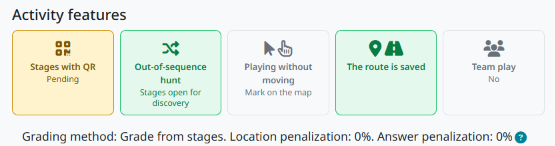
2. Configure the Moodle activity
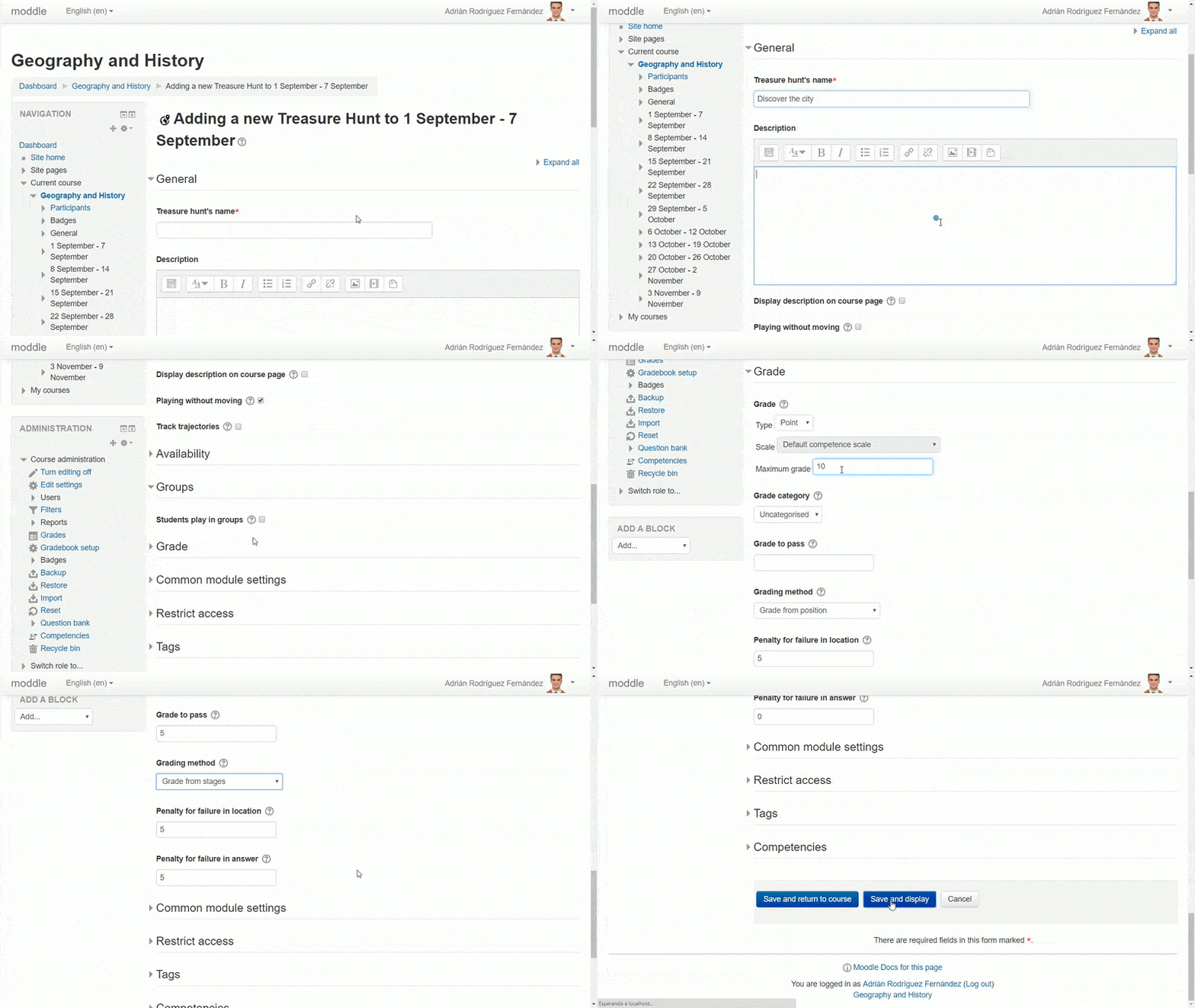
- In the course, turn editing on and add Treasure Hunt. Enter a short title and a clear introduction with the starting place, duration, safety guidance and equipment.
- Choose individual or team play. For teams, prepare groups and groupings first; follow the team guide.
- Choose whether students must physically move or may mark a position on the map. Review GPS, QR, hints, attempt penalties, grading and whether routes are recorded.
- Save the activity, then open its geographic editor.
3. Build a road
A road is the ordered sequence of stages a participant or team follows. Create one road for a shared route or several roads for different teams or variants. Give every road a recognisable name. Select the road tab, then add stages in the side panel. A valid road needs at least two stages with geometry.
4. Add and describe stages
- Select a road and choose Add stage. Give the stage a short, useful name.
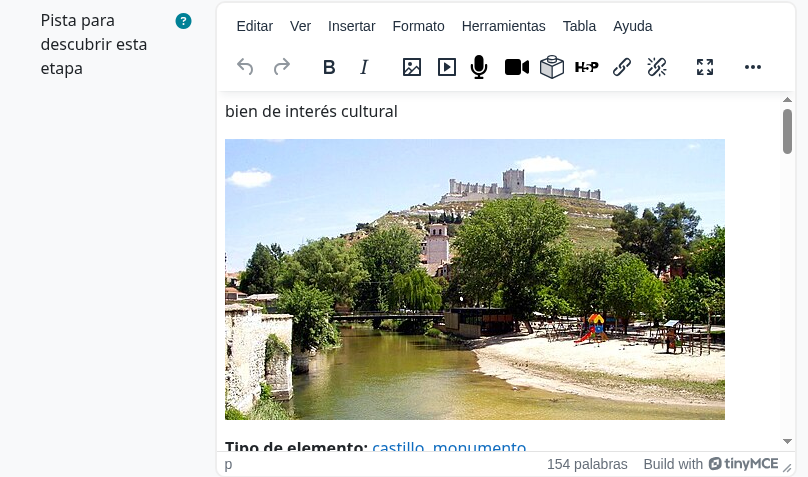
- Write one or both clue fields: Clue for the next stage or end of hunt and Clue to discover this stage. At least one must contain content. The last stage’s next-stage clue becomes the closing message.
- Use the map drawing control to create a point or area at the discovery location. Select the stage first. Edit vertices or delete and redraw geometry as needed.
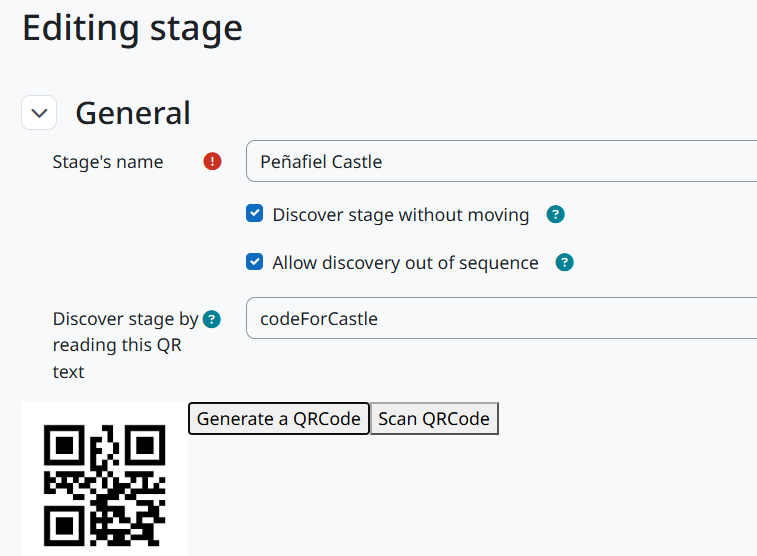
- Optionally add a multiple-choice question, QR discovery, activity restrictions or out-of-sequence discovery. Save and check the stage summary card.
5. Understand clue priority
The normal sequence follows the first incomplete stage. If its previous stage is complete and contains a clue for the next stage, players see that outgoing clue. Otherwise they see the target stage’s clue to discover this stage, if provided. A stage allowed outside the sequence may add its own clue when its predecessor is still incomplete. Completed stages are skipped in the forward sequence.
6. Validate and preview
Review warnings on the road and stage tabs. Check that every intended stage has a usable geometry and clue, and that team roads have an assigned grouping. Use the road’s Play action or the activity’s Preview button as a teacher. Test both a correct position and an incorrect attempt. Then test the full flow with a student account.

7. Monitor the activity
The activity page shows user progress by road and sequence. Review completion, attempts, scores and recorded itineraries when enabled. The tracker viewer helps inspect movement; clear individual sequences or a road only when you intentionally need a fresh run.
Enable Show other students progress in the activity settings to display a live participant bar above each road’s progress table, in the tracker viewer and at the top of the player. Circles show participants’ progress along the road.

- Individual play uses a profile photo, or initials when there is no photo.
- Team play uses a coloured circle with initials; click or tap it to see the team name.
- Green means the participant passed a stage and is looking for the next one; amber means a stage is waiting for its restrictions; red marks a failed stage.
- A thicker glowing border identifies your own participant or team.